Core Sorting Logic
At its heart, this puzzle asks players to group similar items together. Each jar holds a stack of ingredients, and the only way to move an item is to place it on top of a matching ingredient or into an empty container. This simple rule creates a satisfying chain of decisions. Players must think ahead, as a wrong move can trap an ingredient beneath others and block progress. The challenge grows as more ingredient types appear, requiring sharper observation and memory.
Visual Design and Atmosphere
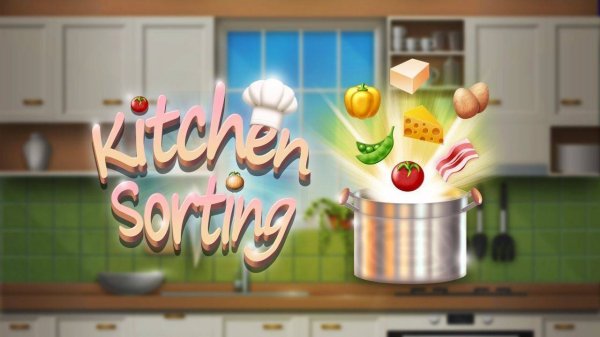
The kitchen setting uses bright, clean colors and friendly shapes. Fruits like apples and oranges are easy to distinguish from vegetables and grains. Each ingredient has a clear, appealing look that makes sorting intuitive. The background remains calm, with no flashing elements or distracting animations. This design choice keeps the focus on the puzzle itself, making it suitable for short breaks or longer sessions.
Progression and Rewards
After successfully grouping all ingredients into their designated jars, players pour them into a cooking pot. This action triggers a short animation showing a finished meal, such as a salad or a bowl of soup. Seeing the result of careful sorting provides a small but satisfying sense of completion. The game does not track failures or impose penalties, so each round feels like a fresh start. This structure encourages repeated play without stress.
Controls and Accessibility
Interaction relies entirely on tapping. Selecting a jar reveals the top ingredient, and tapping another jar attempts the transfer. This one-touch system works well on touchscreens and with a mouse. There are no timers, score counters, or complex menus. Players of all ages can pick up the game and understand the mechanics within seconds. The lack of written instructions also makes it accessible to those who prefer visual learning.
Strategic Depth Without Pressure
Although the rules are simple, effective sorting requires planning. Keeping an empty jar available for temporary storage often makes the difference between a smooth round and a blocked board. Experienced players learn to prioritize ingredients that appear in larger quantities first. The game rewards patience and methodical thinking rather than speed. This balance between simplicity and depth keeps the activity engaging without becoming frustrating.
Compatibility
✅ This game supports:
- Desktop browsers (Chrome, Edge, Safari)
- Mobile browsers (Chrome on Android, Safari on iOS)
❌ Does NOT support: - Internet Explorer - Very old browser versions
👉 Try refreshing or updating your browser



Player Comments
Sign in to comment
You must be logged in before posting a review or rating.
No account? Create one
No comments yet. Be the first to comment!