Drawing as the Only Control
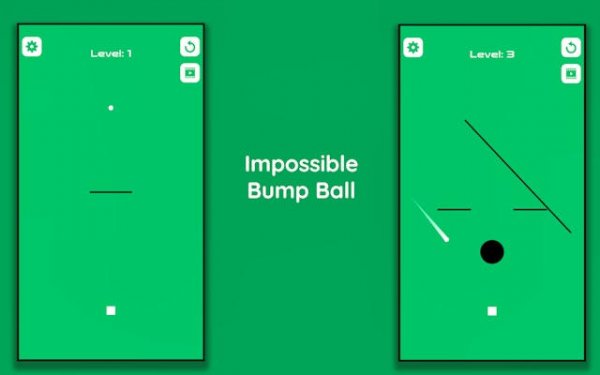
Bounce Ball: Draw & Puzzle Game gives you a single tool: your finger. The ball rolls on its own from the moment a level begins, and your only way to influence it is by sketching lines on the screen. Those lines harden into solid surfaces the ball can bounce off. A well-placed ramp sends it upward; a vertical wall changes its horizontal direction; a curved tunnel guides it through tight gaps. Because the ball never stops, every stroke is a race against its current position. The physics engine ensures each collision behaves predictably, so a failed attempt usually traces back to a drawing decision rather than random chance.
Limited Ink and Growing Obstacles
Early stages allow generous ink, letting you experiment with long ramps and multiple walls. As you progress, the ink meter shrinks and new elements appear. Moving platforms shift the timing of your bounces. Fragile blocks break on contact, forcing you to route the ball around them instead of using them as support. These additions turn simple sketching into a resource puzzle: do you spend ink on a safety net near the target, or on a precise angle that saves material but demands exact placement? The star collectibles on each level add a second layer of optimization, rewarding routes that grab every star without exceeding the draw limit.
Immediate Feedback and Replay Value
There is no delay between drawing and seeing the result. The ball reacts instantly, so you learn from each attempt within seconds. That quick loop makes replaying a level to shave off a stroke or collect a missed star feel natural rather than tedious. The clean visual style keeps attention on the ball's path and the lines you create, with no decorative clutter to hide the geometry. Short sessions work well because most puzzles can be retried immediately, while longer sittings suit players who enjoy refining a single solution until it is efficient.
Compatibility
✅ Works on PC & Mobile | Recommended: Chrome / Safari / Edge






Editorial Notes