How the Sliding Mechanic Works
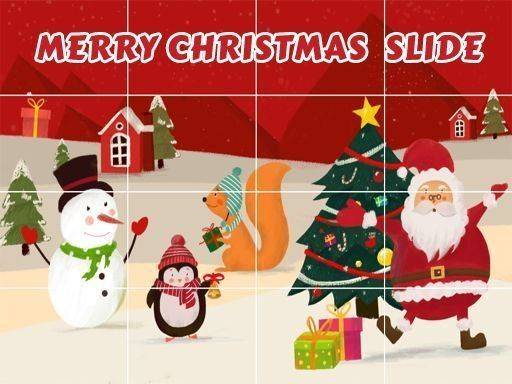
Each puzzle presents a grid of tiles, with one empty space. Tapping or clicking a tile adjacent to that gap slides it into the empty spot. Repeating this action rearranges the tiles until the full festive image is restored. The rule set is minimal, so new players can make their first move within seconds, yet the same mechanic supports deeper spatial planning on larger grids.
Grid Sizes and Difficulty
Three grid configurations set the challenge level. A 3x3 grid solves quickly and works well for a short break or a first attempt. The 4x4 grid asks for more patience and forward thinking. The 5x5 grid demands careful strategy and a strong memory for visual details. All sizes draw from the same set of holiday images, so a familiar scene can be replayed at a higher difficulty.
Holiday Visuals and Variety
Puzzles feature holiday-themed pictures such as a decorated room or a snowy outdoor scene. Multiple images are available for each grid size, which keeps the visuals fresh across repeated sessions. This variety also creates a gentle sense of progression as players work through the collection.
Pacing and Controls
There is no countdown timer and no score system, so nothing pressures the player to rush. Progress can be paused and resumed later without penalty. Controls respond to both touchscreen taps and mouse clicks, keeping the experience consistent across devices.
Approaches That Help
On larger grids, a methodical approach pays off. Completing one row or column at a time keeps the board from becoming chaotic. Starting with the 3x3 grid helps beginners learn how tiles interact before moving to 4x4 or 5x5 layouts. Planning moves instead of tapping randomly leads to faster and more satisfying completions.
Compatibility
✅ This game supports:
- Desktop browsers (Chrome, Edge, Safari)
- Mobile browsers (Chrome on Android, Safari on iOS)
❌ Does NOT support: - Internet Explorer - Very old browser versions
👉 Try refreshing or updating your browser






Editorial Notes