Swap, Match, Cascade
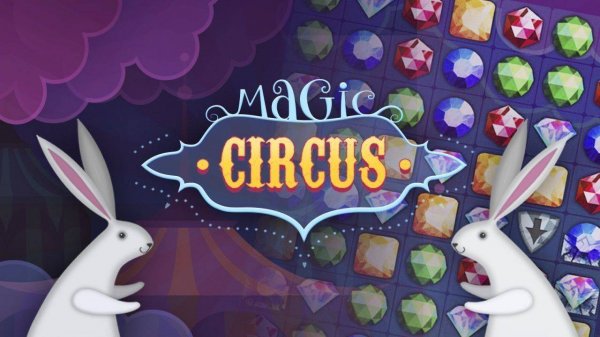
Gemstone Circus Match is a tile-swapping puzzle. The player selects two adjacent gems and exchanges their positions to form a line of three or more identical stones. When a match clears, new gems fall into the empty spaces, which can set off further matches without another swap. That cascade system is the heart of the game: a single well-placed swap can clear far more of the board than several random moves. The board rewards observation and forward thinking, not speed.
Inside the Big Top
The entire game takes place inside a brightly decorated circus tent. The setting is a consistent theme, not a static background. Gems use vivid, saturated colors that stand out against the darker tent interior. Animations stay lively, with pieces bouncing and sparkling when matched. Cheerful, upbeat music and clear sound effects accompany each match, creating a playful atmosphere that supports the puzzle without overwhelming it.
Obstacles That Change the Board
Later boards introduce elements that demand more strategic thinking. Locked tiles must be matched multiple times before they break free. Crystal blocks occupy spaces and cannot be moved, so players must work around them. Teleporters relocate gems to different parts of the board, adding surprise and requiring players to track gem positions more carefully. These obstacles appear gradually, so each one can be learned before facing them in combination. This layered difficulty keeps later stages distinct from earlier ones.
No Lives, No Waiting
Gemstone Circus Match has no lives or energy system. There is no timer to wait for and no currency needed to continue playing. Players can retry a challenging level as many times as they like, experimenting without penalty. That freedom encourages learning and mastery, because each attempt reveals more about the board layout and the most effective matching strategies. The design suits both short sessions and extended play.
Goals and Progression
The game includes a large number of levels, each with a specific goal such as reaching a target score or clearing a certain number of obstacles. Early levels serve as a gentle introduction, while later stages require more careful planning and efficient matching. The difficulty curve is smooth, with each new challenge building on skills from previous levels. Players can always see how many levels they have completed and how many remain, adding a goal-oriented layer to otherwise relaxed gameplay.
✅ Compatibility & Testing
• Desktop (Windows 11, macOS Ventura)
• Mobile (iPhone 14, Samsung Galaxy S23)
• Tablet (iPad Pro, Android tablet)
✅Supported browsers: Chrome, Safari, Edge, Firefox (latest versions)
❌ Not supported: Internet Explorer, older browser versions






Editorial Notes