Rooftop Course Design
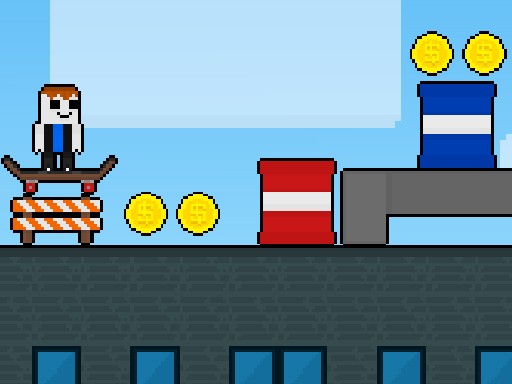
Each stage places Obby on building rooftops and stacked construction blocks, so the ground is never a safe fallback. Narrow paths, gaps, and obstacles form the route between the start and the finish line. That layout makes every jump a commitment: overshoot and you leave the course, undershoot and you stop short of the next platform. Coins sit along the same paths, which forces a small decision each time—take the safer line or the one that grabs more coins.
Controls and Movement
Obby Skate Parkour Runner keeps input simple. Players tap or click to jump over gaps and past obstacles, then steer along the course. The challenge comes from timing and balance rather than complex button combinations, which is why the game suits younger players and casual sessions. Because the controls stay the same across stages, improvement comes from reading each course faster and reacting sooner, not from learning new inputs.
Two-Player Arcade Play
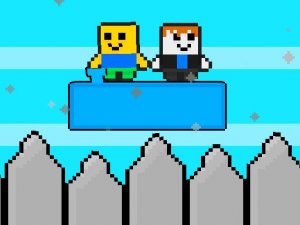
A 2-player mode lets two people share the arcade-style experience on the same courses. That mode turns a solo timing test into a social one, since both players face the same rooftop hazards and coin placements. It also gives the game replay value beyond a single run: the same level can be approached differently depending on whether you focus on finishing cleanly or chasing a higher coin count.
Difficulty and Progression
Stages grow more demanding as you progress, adding harder paths and tighter timing without changing the basic rules. The finish line stays the goal, so success is measured by reaching it safely and by how many coins you collect along the way. This structure rewards practice: learning an obstacle pattern makes the next attempt less about luck and more about precision. The game is non-violent and built for family play, with colorful visuals and smooth controls supporting the casual tone.
Compatibility
• OS: Windows 10+, macOS 11+, iOS 14+, Android 10+
• Browsers: Chrome 100+, Safari 15+, Edge 100+, Firefox 100+
• Not compatible with Internet Explorer
Tested on real devices ✅ works as expected





Editorial Notes