Two Vikings, One Player
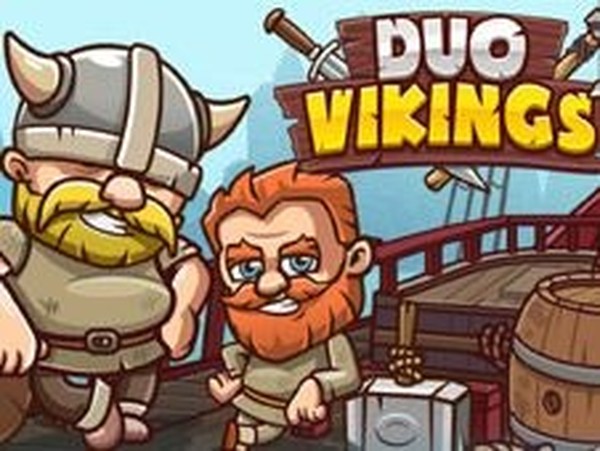
The defining twist in Duo Vikings Puzzle Adventure is that a single player manages two characters at the same time. Each viking responds to its own set of keys, so you are effectively splitting your attention between two bodies sharing one screen. Success depends less on reflexes and more on planning which viking moves when.
Controls and Core Actions
One viking uses W, A, and D to move and jump, with S for smashing. The other uses the arrow keys, with the Down arrow for smashing. Smashing is not just decorative; it is one of the few direct actions each character can take against obstacles. The rest of the toolkit comes from the environment itself.
Buttons, Levers, and Shared Progress
Rooms contain interactive elements such as buttons and levers that clear paths or open routes. Because both vikings must reach the exit door, a lever pulled by one character often determines what the other can do. Traps and hazards punish careless movement, so the order of actions matters as much as the actions themselves.
Coins, Difficulty, and Scoring
Three golden coins are hidden or placed in each level. Collecting all three earns a perfect score, which gives each room a secondary goal beyond simply finishing. Later levels use larger environments and more demanding puzzle layouts, so coordination requirements grow as you progress. The game is designed to be safe for all ages, with no violent or inappropriate content.
Playing Solo or With a Partner
Although the game is built around cooperative two-character control, it also supports a partner handling one set of keys while you take the other. Solo play leans on timing and memory; paired play leans on clear communication. Both approaches are viable because the core challenge is the same: keep two vikings alive and moving toward the same exit.
Compatibility
✅ Works on PC & Mobile | Recommended: Chrome / Safari / Edge




Editorial Notes