Core Throwing Mechanic
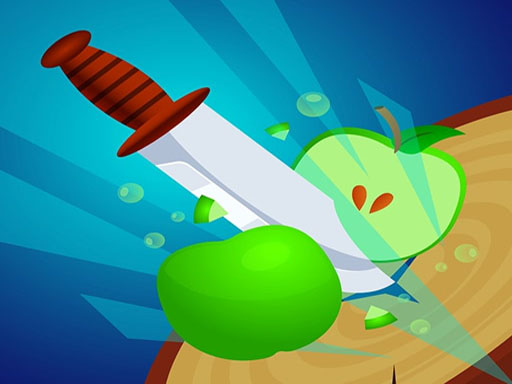
Precision Toss Arcade Game strips the throwing challenge down to a single action: tap or click to launch an object at a rotating target. The target already holds several objects, and your throw must land in a clear space without clipping anything already stuck there. That one rule creates the entire tension. You are not aiming at a bullseye; you are threading a moving needle. The target's rotation means the open spot you see now will shift by the time your object arrives, so timing matters as much as placement.
How Difficulty Scales
Each successful throw adds a point and introduces another object to the target. More objects mean fewer safe landing zones, and the target may speed up or change direction. The game does not announce these shifts with warnings; you read them from the target's motion. Early throws feel forgiving, but as the surface fills, the margin for error shrinks. A single collision ends the run, so the challenge curve is steep once the target is crowded.
Controls and Accessibility
There are no complex inputs to learn. The entire control scheme is a single tap or click, which works on desktop and mobile browsers without downloads or installations. That simplicity makes the game approachable for children and casual players, and the bright visuals and satisfying sound effects keep the tone light. No violent content appears at any point.
Timing Strategy
Watch the target's rotation pattern before throwing. The widest gaps between objects are your best targets, and they reappear at predictable intervals. Rushing leads to collisions, so patience beats speed. As the target accelerates, anticipate where the gap will be rather than reacting to where it is. Short breaks help maintain steady performance when frustration builds.
Compatibility
• OS: Windows 10+, macOS 11+, iOS 14+, Android 10+
• Browsers: Chrome 100+, Safari 15+, Edge 100+, Firefox 100+
• Not compatible with Internet Explorer
Tested on real devices ✅ works as expected






Editorial Notes