Forward Motion, Backward Awareness
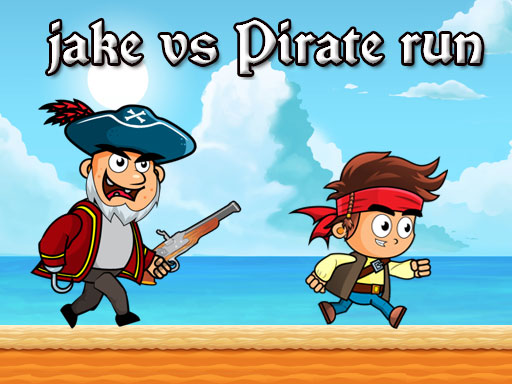
Jake Treasure Chase Runner is an arcade running game built around a split-attention mechanic. You guide Jake, a young sailor, through obstacle courses toward his ship while a pirate gives chase. The pirate fires projectiles at Jake, so you must periodically look backward to dodge shots. That backward glance interrupts the usual forward-only focus of running games, forcing you to manage two directions of threat at once. The result is a runner that tests timing and attention rather than pure speed alone.
Controls and Core Actions
Using keyboard arrow keys or on-screen controls, you move Jake through each level. Jump over barriers and slide under low-hanging traps. Enemies appear along the path, and colliding with them ends your run. The controls are simple to learn, which keeps the challenge focused on reaction speed and planning. Each level increases in difficulty, so the patterns you memorize early become less forgiving later.
Progression and Difficulty
The game offers multiple levels of increasing difficulty. Early stages introduce the basic jump, slide, and backward-glance rhythm. Later stages combine obstacles and enemy placements in ways that demand quicker reflexes and more careful route planning. Because the pirate's shots come from behind, you cannot rely on forward vision alone. Completing all levels means helping Jake reach his ship safely, giving each stage a clear finish line.
Who This Runner Suits
Jake Treasure Chase Runner is designed to be family-friendly, with no graphic content. The simple controls and clear objective make it accessible to new players, while the backward-dodge mechanic adds a layer that experienced runner fans may appreciate. If you enjoy reflex-based arcade games that ask you to watch two directions at once, this one is built around that exact tension.
Compatibility
This H5 game runs smoothly on:
• Desktop computers (Windows / Mac) • Mobile phones (iPhone / Android)
• Tablets (iPad / Android)
🌐 Best experienced with Chrome, Safari, or Edge







Editorial Notes