Jumping Through a Space Course
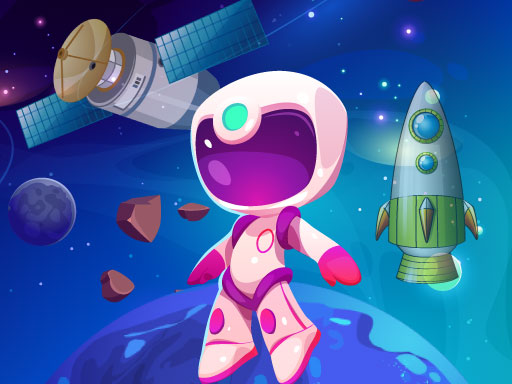
Space Attracts Jumping Challenge places a character on a series of floating platforms suspended in a vibrant space environment. Your goal is simple: move from one platform to the next without falling. The character either moves automatically or responds to directional input, depending on how you play, and each successful landing adds points. The run ends the moment you miss a platform or hit an obstacle.
Timing Over Speed
Jumping too early or too late sends the character into the gap below, so the game rewards patience and observation rather than frantic tapping. Obstacles appear along the route and demand quick reactions, but the core skill is reading the distance between platforms before you commit to a leap. As the run continues, speed or complexity can increase, which raises the pressure on every jump.
Controls and Accessibility
Keyboard keys or touchscreen taps handle all input, which keeps the game approachable for beginners. There is no complex command list to memorize. The challenge comes from rhythm and coordination, not from learning a control scheme. That makes Space Attracts Jumping Challenge easy to start but difficult to master, especially once the pace picks up.
Multiplayer and Replay Value
A multiplayer mode lets friends play together simultaneously, which adds a social layer to the score chase. You can compete for high scores or simply try to survive longer than your previous run. Short sessions suit quick breaks, while the endless progression gives dedicated players a reason to return and improve their timing.
Compatibility
• OS: Windows 10+, macOS 11+, iOS 14+, Android 10+
• Browsers: Chrome 100+, Safari 15+, Edge 100+, Firefox 100+
• Not compatible with Internet Explorer
Tested on real devices ✅ works as expected








Editorial Notes