Two Sides, One Screen
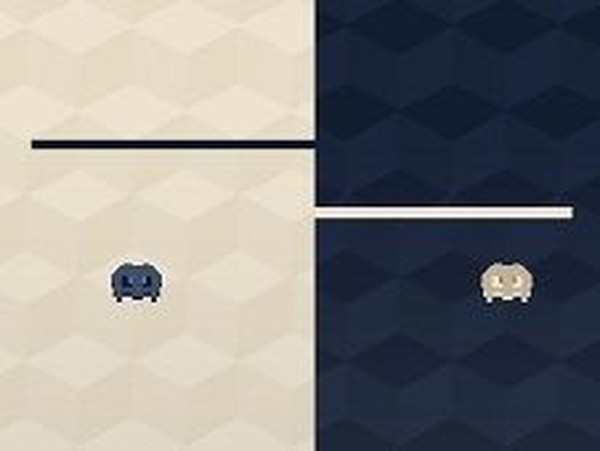
Flipside Color Dodge Arcade divides the display into two distinct colored halves, one per player. Each side hosts its own character and its own set of incoming obstacles. The twist is that obstacles appear as lines of the opposite color on your side, so you must track both the color and the position of every line. Two players compete simultaneously on the same device, which makes every round a direct test of who reads the screen faster.
Dodging as a Scoring System
Points come from successful dodges. Every line you avoid adds to your score, and the player with the most points when the round ends takes the win. That turns survival into a race: playing too cautiously may keep you alive, but it also limits how many obstacles you can clear. The scoring system rewards players who stay calm under pressure and keep moving rather than freezing in a safe corner.
Controls and Local Competition
Controls are keyboard-based. One player uses a dedicated set of keys while the other uses the arrow keys, a layout that keeps both hands busy and both players on equal footing. Because the game is designed for local multiplayer, there is no matchmaking or online lobby to navigate. You sit next to your opponent, see the same screen, and react in real time. That immediacy is the core of the experience.
Reading Patterns, Not Just Reacting
At first, dodging feels like pure reflex. Over time, the better approach is to watch how lines arrive and anticipate where the next gap will be. Players who learn to think one step ahead tend to outlast players who only react to what is already on screen. The difficulty scales as you improve, so the challenge stays present without changing the basic rules. Rounds are short, restarting is quick, and the simple visual design keeps the focus on movement and timing rather than spectacle.
Compatibility
Play on Any Device | Chrome / Safari / Edge Recommended






Editorial Notes